The Courage to Be Seen
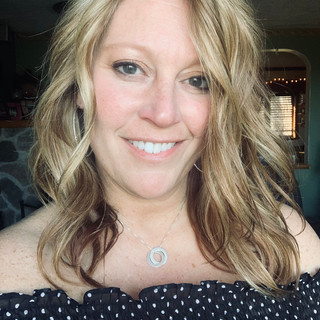

What happens when we become willing to let ourselves be seen—and what might we discover about ourselves in the process?
That is the question I've been thinking about since my conversation with Sean McNally on The Becoming Podcast. If you haven't listened to Sean's story yet, I encourage you to start there. There is something about hearing a person tell their own story—their own words, their own voice, the things they've lived through and the things they've learned—that allows us to experience it differently than we would if someone simply told us about them.
But what has stayed with me most isn't only Sean's story. It is what happened when he told it.
Since recording that conversation, I've been asking some of the people I've interviewed a question I hadn't really thought to ask before: How did it feel to share your story?
Their answers have been surprisingly consistent. Each of them described something about the experience that went beyond simply having a conversation or recording a podcast. There was a sense of empowerment. Of freedom. Of seeing something differently.
And the more I thought about their responses, the more I began to wonder if perhaps one of the most powerful things about telling our stories isn't what happens for the person listening.
Maybe it is what happens for us.
We live our lives from the inside. We know our thoughts, our doubts, our mistakes, our insecurities, the things we wish we'd done differently, and all the places where we don't feel like we measure up. We are so close to our own experience that it can be difficult to see the larger story taking shape.
When we're in the middle of something, we tend to see the individual pieces. We see the difficult decision we're trying to make, the thing that didn't work, the part we wish we could change, or the uncertainty about what comes next. We don't necessarily see how all of those pieces fit together.
Sometimes we need to step outside of our own story to see it clearly.
And sometimes, telling the story is what allows us to do that.
Sean experienced something like this when he listened back to our conversation. He told me that he didn't particularly enjoy hearing his own voice, but as he listened to his story unfold, something much more important happened. He realized he was “truly seeing myself for the first time.”
I keep coming back to that.
He had lived the story. He knew what had happened. None of the facts were new.
But hearing himself tell it created a little distance between the person who had lived the experiences and the person who was now able to look back at them. And from that different perspective, he could see something he hadn't been able to see quite as clearly before.
Sometimes we need someone else to hold the mirror for us. Not to tell us who we are, but to reflect back what is already there.
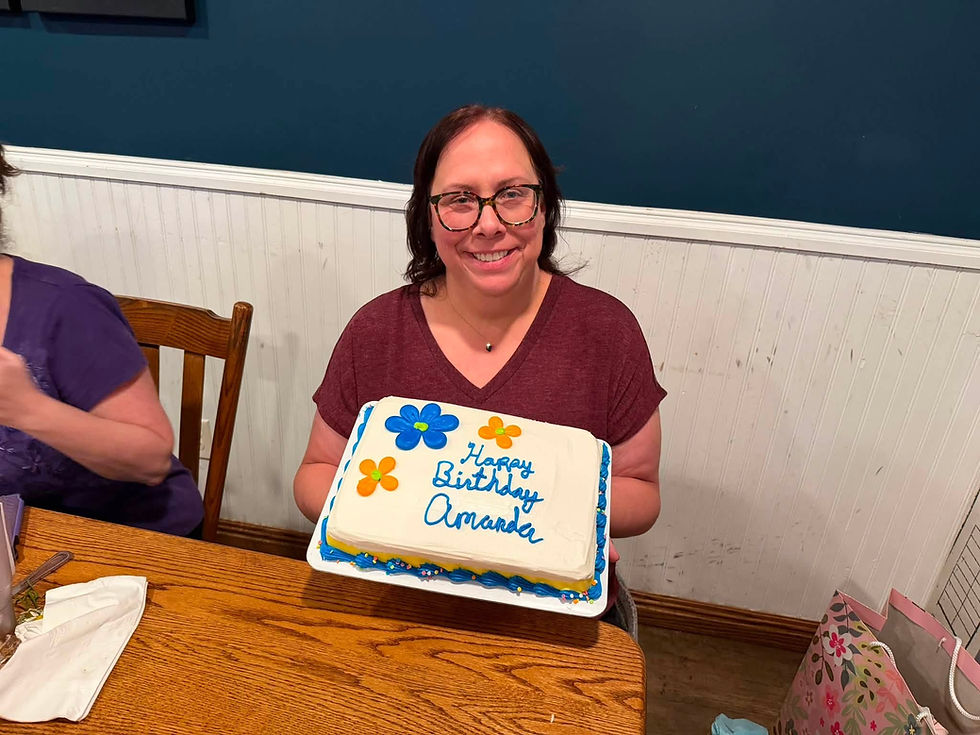
I saw something similar happen with Amanda, although her experience began in a very different
place. When I first asked if I could record our conversation for the podcast, she told me that internally she was “dying on the inside.” She had never spoken into a microphone before, and the idea that people were actually going to listen to what she had to say was almost overwhelming.
And then she said yes.
Afterward, when I asked what the experience had been like for her, she described it as “one of the most freeing moments in my life where I was truly proud of the experience.”
I think there is something important in that transformation.
The fear didn't disappear before she took the step. She took the step while she was afraid, and then discovered something on the other side that she couldn't have known was waiting for her.
Sometimes the thing that feels like the greatest risk from where we're standing becomes the thing that gives us the greatest sense of freedom once we've done it.

Johnnie's experience was different again. After listening to her episode, she told me that she became emotional hearing the story of the community we had created together. She said it still felt surreal.
There was something about hearing it reflected back to her that allowed her to recognize the significance of something he had been part of creating.
And that made me think about how our stories don't exist in isolation. We may experience our lives as a series of individual moments, but there are threads running through them that we don't always recognize until someone helps us step back far enough to see them.
That happened with Ethan, too.
Over the course of several conversations, we worked through his origin story and eventually created his manifesto. Ethan has so many seemingly separate pieces to his life—tattooing, music, filmmaking, writing, podcasting, art—and as we talked, we began to see the thread connecting them.
When I eventually read the finished manifesto back to him, he described it as strange to hear someone else's perspective on his own life. It was, after all, his life. Yet there was something about hearing those pieces gathered together and reflected back to him that allowed him to recognize himself in a different way.
He listened and said, “This is like me.”
I love that moment because I think it captures something we often miss about our own stories. We don't always need someone else to give us an answer or tell us who we are. Sometimes we simply need someone to help us step far enough outside of our own experience to notice what has been there all along. And when we finally see it, something can shift. We may recognize strengths we had stopped noticing because they had become so familiar that we no longer saw them as strengths. We may begin to see patterns that weren't obvious while we were living through the individual pieces of our lives. We may recognize how much we've grown, or look back at something we once considered a weakness and realize just how much courage it actually required. And sometimes, simply seeing those things more clearly gives us a little more confidence in who we are and a little more trust in where we're going.
Why We Are Sometimes Afraid to Tell Our Stories
Of course, there are reasons we hesitate to tell our stories. Being seen can feel vulnerable, especially when we aren't sure how someone else is going to receive what we have to say. We may wonder whether our story is important enough to matter, interesting enough to hold someone's attention, or polished enough to share. We may worry about being misunderstood or judged, or about someone seeing a part of us that we have spent a long time keeping protected.
But sometimes I think the hesitation has less to do with what someone else might see and more to do with what we might see once we are willing to look at our own story honestly. What happens if we say something out loud and realize how deeply it affected us? What if we recognize that we were stronger than we gave ourselves credit for, or see just how much we've changed? What if telling the story requires us to acknowledge something we've been avoiding or to look at an experience from a perspective we haven't been willing to consider before?
There is a certain comfort in keeping our stories to ourselves. When they stay inside of us, we get to decide what they mean, who knows about them, and how much of ourselves we are willing to reveal. We can keep the parts that feel complicated or vulnerable safely tucked away. And there are certainly stories that belong to us alone, at least for a time. Authenticity doesn't mean that everything we experience needs to become public.
But there can also be a kind of freedom in allowing a story to move beyond us. Sometimes that simply means writing it down. Sometimes it means telling a trusted friend, having an honest conversation, or allowing someone who cares about us to hear something we've never quite known how to say. We don't have to tell everything or tell it perfectly. We simply have to be willing, when the time feels right, to say, This is what happened. This is what it meant to me. This is part of who I am because of it.
And sometimes, that small act of allowing ourselves to be known changes the way we hold the story. It doesn't change what happened, but it can change the place from which we look at it. And maybe that is where some of the freedom comes from.
Your Story Doesn't Have to Be Extraordinary
I think we sometimes assume our stories have to be dramatic or inspiring to matter. We imagine that someone else's life is more interesting, their transformation more significant, or their experience more worthy of being heard.
But your story doesn't have to be extraordinary. It simply has to be yours.
It can be messy, unfinished, funny, ordinary, or complicated. It can be something that happened yesterday or twenty years ago. And you don't necessarily have to know what it means yet. Sometimes we begin to understand the meaning simply by giving ourselves the space to tell it.
That is one of the things I've been learning through this season of Expression: sometimes we don't know what we have to say until we allow ourselves to say it.
What This Season Has Taught Me About Being Seen
There are still moments when I write something for a podcast, a blog, or a book and wonder, Am I really comfortable being this raw? Do I really want people to see this much of me? I usually give myself some time and come back to it before I decide whether it belongs. And sometimes I edit. But more often than not, the vulnerable part stays because when I try to take it out, something feels missing. The words may be cleaner and the story may feel safer, but it doesn't feel quite as true.
I think that is one of the biggest things this season of Expression has taught me: when showing up authentically becomes a regular practice, being anything else begins to feel uncomfortable.
Somewhere around the middle of this season, I essentially threw up my hands. Not because I had become fearless, but because fighting it had become harder than allowing it. There is simply so much moving outward for me right now that I don't have the same time or energy to second-guess everything I create. And once the momentum starts, it becomes difficult to stop.
I've used the image of a river before, and I keep coming back to it because it feels so true. Once the water has found its direction, interrupting the flow takes an enormous amount of energy. At some point, I realized I was spending more energy trying to stop the current than I was spending allowing myself to move with it.
But I think there is something deeper than momentum. When authentic expression becomes a practice, inauthenticity begins to feel wrong. It's not that I believe everything should be shared or that vulnerability means having no boundaries. It simply means that I don't want fear of being seen to decide what gets removed from my story.
I've learned to give myself the opportunity to reconsider those vulnerable moments, but when I return to them, I often realize that taking them out would mean taking out part of what makes the story true.
So I leave them.
Maybe that is what happens when we practice showing up as ourselves often enough. The thing that once required courage gradually becomes familiar, and eventually, holding ourselves back can feel more uncomfortable than moving forward.
The river has found its direction.
And now, rather than spending my energy trying to stop the current, I'm much more interested in seeing where it takes me.
Maybe Being Seen Isn't the Point
We talk a lot about wanting to be seen—to be understood, heard, and accepted—and those things matter. We are human beings, after all, and we need one another. But the more I've thought about these conversations, the more I wonder if there is something even more meaningful on the other side of being seen: the opportunity to see ourselves more clearly.
Sometimes another person can listen to our story closely enough to become a kind of mirror. Not one that tells us who we are, but one that helps us notice what we couldn't quite see from where we were standing. We may recognize courage we had overlooked, strengths that had become so familiar we no longer noticed them, or patterns and changes that weren't obvious while we were simply living through them.
Maybe that is what I've been witnessing in these conversations. Sean heard his own story and realized he was seeing himself differently. Amanda stepped into something that initially terrified her and discovered a sense of freedom and pride on the other side. Johnnie heard the story of a community he helped create and was moved by seeing it reflected back to him. Ethan stepped outside his own experience and recognized pieces of himself more clearly when someone else put them together.
Different people, different stories, different experiences, but something similar happened in each one: something that had been inside became visible.
And once we can see something more clearly, we have a choice about what we do with it.
Maybe that is where courage comes in. Not in becoming someone who is never afraid of being seen, but in becoming willing to let ourselves be seen anyway—and trusting that there may be something waiting for us on the other side that we couldn't see from where we were standing.
Maybe Your Story Is Waiting for You
I've been asking people to share stories about times when they stepped outside their comfort zones, and I'm becoming equally as interested in what happens after the step than in the step itself. How did it feel? What did you learn? Did you see yourself differently? Did it change your confidence or what you believed you were capable of? Did someone else see something in you that you hadn't been able to see for yourself?
Those are the stories I'm interested in. Not simply, I did something scary, but I did something I wasn't sure I could do, and I discovered something about myself on the other side.
Maybe you have a story like that. Maybe it was something big, or maybe it was something that seemed small to everyone else but felt enormous to you. Maybe you took a chance, tried something new, spoke up, started over, allowed yourself to be vulnerable, or let yourself be seen in a way you hadn't been willing to before.
I'd love to hear it.
For an upcoming episode of The Becoming Podcast, I'm gathering stories from the Becoming community about what can happen when we step outside our comfort zones. If you have a story you'd like to share, visit totaltransformation.life and reach out to me. I'd love to hear what happened.
Your story doesn't have to be extraordinary or polished, and it doesn't need to have a perfect ending.
It just has to be yours.
Because sometimes the person who needs to hear your story isn't someone else.
Sometimes it's you.
And sometimes, when we finally allow ourselves to be seen, we discover that the person we've been waiting to become has been there all along.
We just needed to see them.
Becoming, always returning,
Carrie

Founder, Total Transformation
NBC-HWC Health Coach


Comments